How to Build Your Toddler's Vocabulary During Daily Routines
Learn how to build toddler vocabulary daily routine style with simple, natural conversation habits woven into mealtimes, baths, and play.
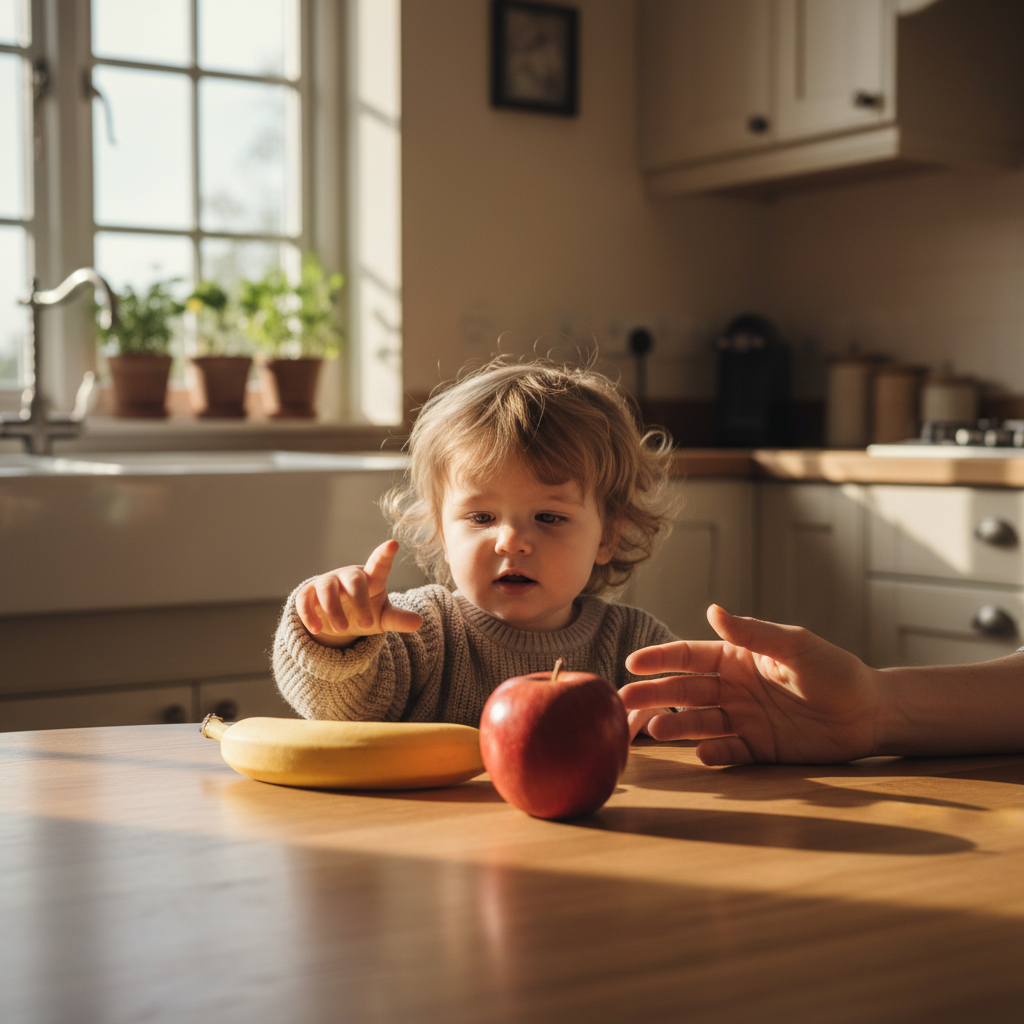
Your toddler's vocabulary doesn't grow from flashcards or formal lessons alone — it grows from the thousand small conversations you already have every single day. If you're wondering how to build toddler vocabulary daily routine style, the good news is that you don't need extra time or special tools. You simply need to talk a little more intentionally during the moments you're already sharing together, like breakfast, bath time, and the walk to the car.
1. Narrate What You're Doing Together
One of the simplest ways to introduce new words is to describe your actions out loud as you go about the day. While making breakfast, you might say, "I'm cracking the egg, now I'm stirring it, see how it's turning yellow?" This kind of narration exposes your toddler to verbs, adjectives, and sequencing words in a context they can see and touch, which makes the meaning much easier to grasp than a word on its own.
You don't need to narrate everything all day — that would be exhausting for both of you. Instead, pick one or two routines, like getting dressed or tidying toys, and make describing them a gentle habit.
2. Turn Mealtimes Into Word-Rich Moments
Mealtimes are a wonderful opportunity to expand vocabulary because there are so many objects, textures, and tastes to talk about. Instead of simply saying "eat your food," try naming things specifically: "This is a crunchy carrot" or "The soup is warm and steamy today." Asking open-ended questions like "What does this taste like to you?" also invites your child to search for their own words, even if the answer is just one word at first.
### Keep It Relaxed
There's no need to turn every meal into a lesson. A few extra descriptive words sprinkled naturally into the conversation are far more effective than quizzing your child while they're trying to eat.
3. Use Bath Time and Getting Dressed for Body and Object Words
Routines involving the body, like bath time or getting dressed, are a natural fit for teaching words about clothing, body parts, and sensory experiences. You might say, "Let's put your arm through the sleeve" or "The water feels warm on your toes." These repeated daily routines give your toddler the chance to hear the same words over and over in a meaningful context, which helps the words stick over time.
4. Ask Questions That Invite More Than One Word
As your toddler grows more comfortable with talking, try shifting from yes-or-no questions to ones that invite a little more description. Instead of "Do you want milk?" try "What would you like to drink this morning?" Give your child plenty of time to respond, and resist the urge to answer for them. At their own pace, toddlers often surprise us with how much they want to share once they're given the space to do it.
5. Read Together as a Calm, Structured Habit
Setting aside a short, predictable time each day to look at books together — even just five or ten minutes — gives your toddler a structured space to hear new words in a story context. Point to pictures, pause to talk about what's happening, and let your child take the lead on which pages to linger over. Over time, this calm daily habit, done consistently rather than rushed, becomes a gentle foundation for vocabulary growth. For parents looking for a more structured approach to guide this process step by step, the Children Learning Reading program offers a gentle, paced framework designed to work alongside everyday routines like this.
6. Repeat, Rephrase, and Expand
When your toddler uses a word or a short phrase, try repeating it back with a little more detail. If they say "big truck," you might respond, "Yes, that's a big, red truck with huge wheels." This technique, sometimes called expansion, models richer sentence structures without correcting or pressuring your child, letting new words enter their vocabulary naturally through everyday back-and-forth conversation.
Final Thoughts
Building your toddler's vocabulary during daily routines isn't about adding more to your plate — it's about noticing the conversations you're already having and adding a little more texture to them. Every child moves through language development at their own pace, and the goal is simply to create a warm, word-rich environment where curiosity is welcomed. With patience and consistency, these small daily moments add up into something meaningful over time.