Easy Letter-Sound Games to Play with Your Toddler at Home
Discover simple, low-prep letter sound games for toddlers at home that make early learning playful, calm, and enjoyable at their own pace.
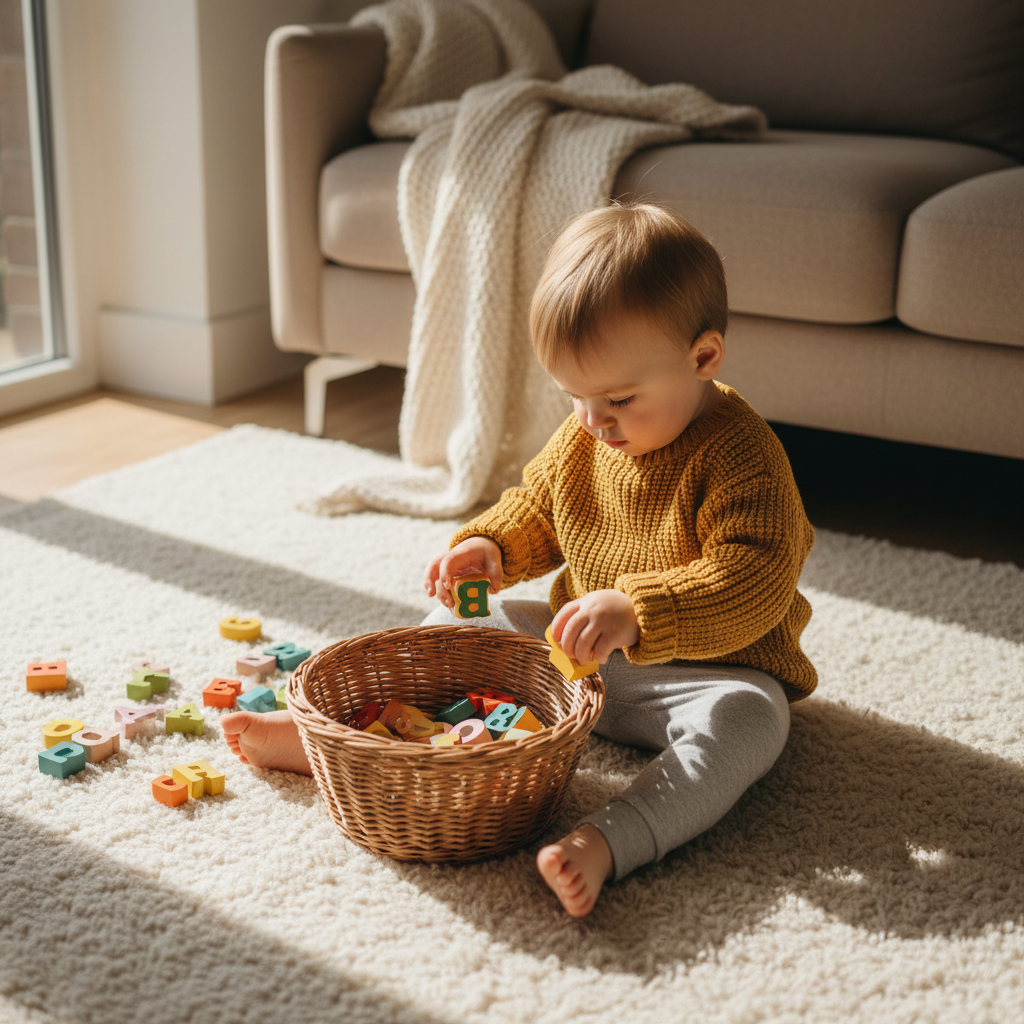
Learning the sounds that letters make doesn't need flashcards, pressure, or a classroom. Some of the best letter sound games for toddlers at home use things you already own — spoons, socks, stuffed animals — and just a few minutes of your attention. The goal isn't to rush your child toward reading, but to gently introduce letter sounds through play, at a pace that feels natural and fun for them. Below are simple, low-prep games you can start today, no special materials required.
1. Why Letter-Sound Games Matter at Home
Before children can blend letters into words, they need to feel comfortable with individual sounds. Hearing and playing with sounds in a relaxed setting — rather than a formal lesson — helps toddlers build familiarity without feeling tested. Home is actually an ideal place for this kind of learning, because there's no clock, no comparison, and no 'right' way to play.
Short, playful sessions of five to ten minutes are plenty. The idea is consistency over intensity — a little bit most days works better than one long session now and then.
2. The Sound Hunt Game
Pick one letter sound, like /b/, and go on a mini scavenger hunt around the house together. Ask your toddler to find things that start with that sound — a ball, a book, a banana. This turns an abstract concept into something tangible they can touch and hold.
You can make it even more engaging by putting found objects into a basket and naming each one together afterward. There's no need to correct every mistake; if they bring you a spoon for the /b/ sound, simply say the correct sound aloud as you continue playing, modeling rather than testing.
3. Sock or Puppet Sound Friend
Turn an old sock into a simple puppet and give it a letter-sound personality — for example, "Mr. S" who only likes things that start with /s/. Your toddler can feed Mr. S pretend food or toys that match his sound, giggling along the way.
This kind of imaginative play lowers the stakes completely. Toddlers often respond better to a silly puppet's request than a direct instruction, and it keeps the mood light and playful rather than instructional.
4. Letter Sound Matching with Household Objects
Gather a handful of small household items and a few letter cards or magnets. Lay the letters out and take turns matching an object to its starting sound. If you don't have letter cards, simply write letters on sticky notes.
This is also a nice moment to introduce the idea of matching sounds to written symbols, gently connecting speech to print. For parents who'd like a ready-made set of games and printables for this kind of structured play, the Home Learning Pack offers simple activities designed for this exact stage.
5. Sing-Song Sound Repetition
Toddlers love rhythm, so turn letter sounds into a simple chant or tune. Repeating "/m/, /m/, muffin... /m/, /m/, monkey" in a sing-song voice makes the sound memorable and fun, without feeling like a drill.
You can invite your child to come up with their own silly words using the sound, even nonsense ones. The goal here isn't correctness — it's getting comfortable noticing and playing with sounds in everyday language.
6. Keeping It Low-Pressure
It's worth remembering that every child settles into these games differently, and that's completely normal. Some days your toddler might be eager to play for fifteen minutes; other days, two minutes is enough. Following their energy and interest keeps the experience positive, which matters more in these early years than covering a set number of letters.
If you'd like a more structured, step-by-step approach once your child shows consistent interest in letters and sounds, a gentle guided resource like Children Learning Reading can offer a clear, paced pathway to build on what these games begin.
7. Making It a Daily Habit
The simplest way to keep letter-sound play going is to attach it to something you already do — bath time, snack time, or the walk to the car. A quick "I spy something that starts with /t/" while waiting for toast takes seconds but adds up over weeks.
Small, playful moments repeated often tend to feel more natural to toddlers than scheduled lessons. With warmth, patience, and a bit of silliness, letter sounds become just another fun part of your day together — not a milestone to rush toward, but a skill that grows steadily at your child's own pace.